
Background
Most people think a blanket is chosen for color and price, something meant to match a duvet cover or complete a room’s look. That assumption holds up until someone spends a restless night under the wrong fabric and can’t figure out why. Comfort during sleep depends on more than warmth; it depends on how a material feels against skin for hours at a stretch. A blanket that traps heat unevenly or feels rough against sensitive skin can quietly undermine sleep before a person ever notices the cause. Texture, weight, and breathability all play quieter roles than most shoppers realize.
Bedding manufacturers have known this for years, which is why fabric innovation has become a selling point rather than an afterthought. Household discussions about mattresses and pillows rarely extend to blankets, even though blankets sit directly against the body for the longest stretch of the night. The gap in attention creates a blind spot: people upgrade one layer of their sleep setup while ignoring another that matters as much. Retailers rarely explain these differences to shoppers, leaving most people to guess based on price tags and color swatches alone. Understanding why texture and material composition affect rest requires looking past marketing language and toward what actually happens to the body during sleep.
What the Research Shows
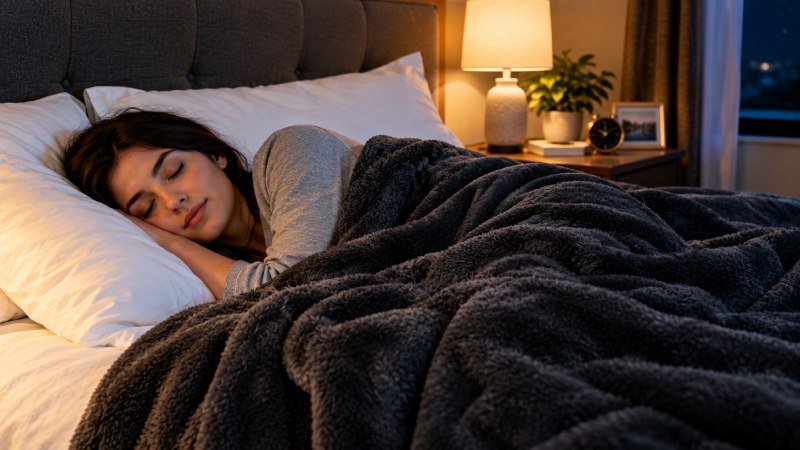
Fabric that feels soft without added bulk tends to reduce the fidgeting that interrupts light sleep stages. Plush materials like a black blanket work by trapping a thin layer of body heat without overheating the sleeper, since the fiber structure allows some airflow even while insulating. That balance is often described as thermoregulation, and it shows up repeatedly in discussions about why some blankets feel restful and others feel stifling. Weight and drape matter too; blankets that mold to body contours rather than sitting stiffly seem to encourage the muscle relaxation associated with deeper sleep stages. Sleepers who report waking less often during the night frequently mention their blanket’s feel as a factor, even when they can’t quite explain why it matters.
Sleep Foundation research has pointed to consistent patterns between bedding comfort and total sleep time, noting that small disruptions—shifting position, adjusting covers, waking briefly to reposition a blanket—add up over a night and reduce overall sleep efficiency. Reducing those micro-disruptions doesn’t require expensive equipment or major bedroom renovations. It often comes down to selecting fabric that stays put, doesn’t trap excess heat, and feels pleasant enough that a sleeper doesn’t unconsciously push it away in the middle of the night. Sleep researchers have also noted that tactile comfort correlates with faster sleep onset, a factor separate from mattress firmness or room temperature. This kind of evidence doesn’t promise perfect sleep, but it does point toward fabric choice as something worth taking seriously.
Practical Takeaways
None of this means every blanket purchase needs to become an exhaustive research project. It does suggest that a few extra minutes spent thinking about fabric weight, softness, and breathability pays off over months of regular use. People who run warm at night might prioritize lighter weaves, while those who sleep cold often do better with heavier, denser fabric that holds warmth without feeling stiff. Checking care labels for fiber content can reveal which fabrics tend to hold their softness through repeated washing, a step most shoppers skip. Testing a blanket for a week or two, rather than judging it in a store, gives a more honest sense of how it performs against skin over several hours.
Small adjustments compound over time, and sleep is one area where marginal improvements are easy to overlook because the effects build slowly rather than appearing overnight. A softer, better-suited blanket won’t fix every sleep problem, but it removes one variable that often goes unexamined. Anyone frustrated by inconsistent rest might find it worth auditing the least glamorous item in the bedroom before assuming the mattress or pillow is to blame. Sometimes the simplest layer in the bed is the one doing the most to help, or hinder, a good night’s sleep.