
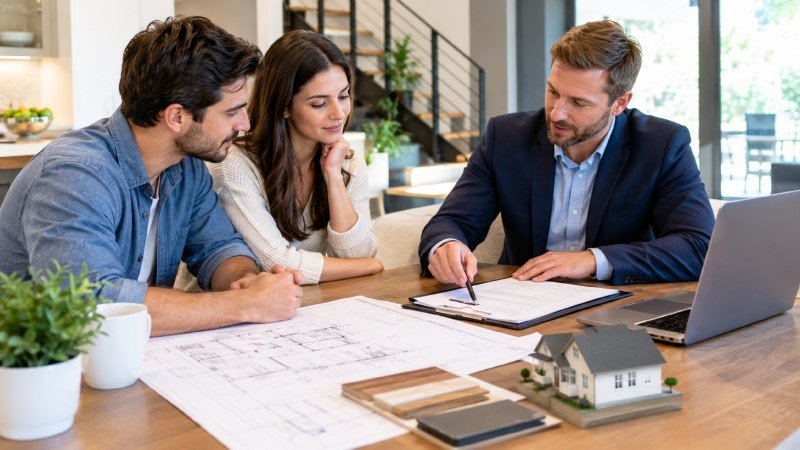
The Conversations Worth Having Before a Contract Gets Signed
Most homeowners assume that choosing a builder comes down to comparing price quotes and picking whoever offers the best deal on paper. That approach treats home building like buying a product off a shelf, when really it’s closer to hiring a long-term partner who will shape thousands of decisions over many months. The lowest bid can hide corners cut on materials, scheduling shortcuts, or subcontractors who were squeezed too hard to do quality work. A homeowner who skips the interview process and jumps straight to signing often discovers the gaps only after framing is already up.
The questions that matter most early on tend to focus on process rather than price. Asking how a builder handles permitting, how they communicate delays, and who actually shows up on site each day tells you more about what your experience will look like than any glossy brochure. Builders who hesitate or give vague answers about their own workflow are often the ones who struggle once a project hits an unexpected snag, and snags are nearly universal in custom construction.
Timing questions also belong in this early conversation, even though many homeowners wait to raise them until later. Ask how the builder sequences subcontractors, what typically causes a project to run past schedule, and how they adjust when weather or supply delays hit. A builder who has thought through these scenarios usually has contingency plans already built into the contract language. Those who brush off the question with a simple assurance that everything always goes smoothly deserve a second look before any paperwork is signed.
Weighing Communication Style Against Technical Capability
Once you have a short list of builders, the real evaluation work begins, and it looks different from simply comparing quotes side by side. A builder might have excellent technical skills but poor communication habits, which can turn even a well-built home into a frustrating experience if you spend months chasing updates. Conversely, a builder who is pleasant to talk to but lacks depth in structural knowledge may leave you exposed to costly mistakes down the line. The strongest candidates tend to balance both, offering clear answers about engineering choices while still being easy to reach when something needs clarifying.
This is where it helps to look at actual project history rather than general reputation. A homeowner working with custom home builder in Loganville, GA might ask to see completed projects in the same price range and style they’re considering, since a builder’s portfolio in similar homes says more than testimonials alone. Walking through a finished home, or even one currently under construction, gives you a sense of craftsmanship that photos rarely capture. Pay attention to small details like trim work, door alignment, and how finishes meet at corners, since these are the areas where rushed labor tends to show first.
Material choices deserve the same scrutiny as communication style. Ask what brands or grades of insulation, windows, and roofing the builder defaults to, and whether those choices were made for cost savings or long-term performance. Builders who can explain the reasoning behind their material selections, rather than just naming a supplier, usually have a better grasp of how a house will perform over decades.
Warranty terms are worth a full conversation of their own rather than a quick glance at fine print. Find out what’s covered beyond the first year, how warranty claims get processed, and whether the builder handles repairs directly or routes you to subcontractors. A builder confident in their own work will typically walk you through this without hesitation, since strong workmanship rarely needs lengthy disclaimers to protect it.
Turning Your Shortlist Into a Final Hire With Confidence
By the time you’ve narrowed your options to two or three builders, the decision usually comes down to trust built through small, consistent signals rather than one dramatic factor. Did they return calls when they said they would? Did their written estimate match what they described verbally, or were there surprise line items? These patterns, observed over several weeks of conversation, tend to predict how the relationship will go once construction actually starts.
It also helps to look outward at how the broader construction industry approaches quality and safety standards, since a builder’s willingness to follow established research rather than just local custom says something about their professionalism. Reviewing guidance from organizations like NIST building and construction research can give homeowners a baseline understanding of what rigorous building practices look like, which makes it easier to ask pointed questions during final interviews. A builder who references recognized standards, rather than just the way things have always been done locally, often has a more disciplined approach to both materials and methods.
Before signing anything, it helps to revisit your notes from every conversation and compare them against the written contract line by line. Minor discrepancies between what was promised verbally and what appears on paper are worth clarifying immediately, since contracts are far easier to amend before signatures than after. Trust your instincts if something feels rushed or unclear, because a builder genuinely confident in their process will welcome the extra scrutiny rather than resist it.