
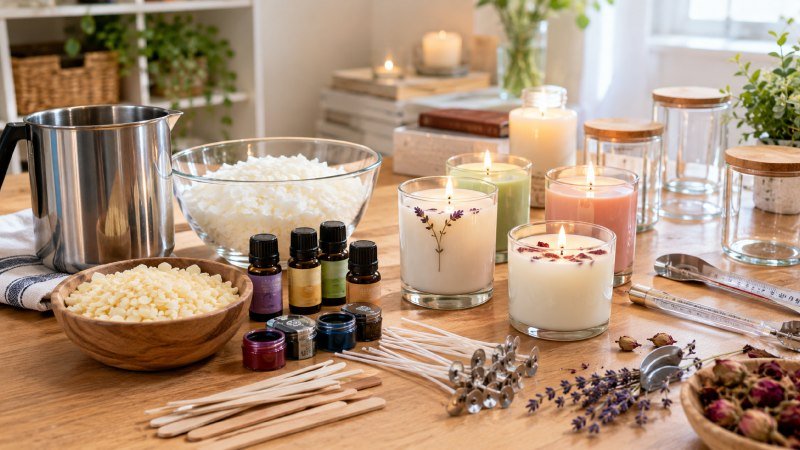
Homemade Candles can be an easy and unique method for producing any space warm, fragrant and individualized. Candle making can be a relaxing hobby for anyone who wants to handcraft relaxing bedroom candles, create decorative items for the home or make homemade gifts for friends and family, with just a few simple tools. Perfect for beginners, the right materials and techniques will let you learn how to make beautiful candles to create attractive perfect burning candles.
Making homemade Candles Essential Supplies.
Collect everything you need for your first candle-making class or activity. Candle wax, wicks, a heat resistant container or mold, a thermometer, a pouring pitcher, and a way to safely melt the wax.
As part of the homemade candle-making process, soy wax is a favorite material for crafting container candles and an often-used material. Alternatively, you can use paraffin wax or beeswax, which has a natural look and aromatherapy smell.
Different sizes of wicks are used with various kinds of wax and in varying diameter candle holders. Using the correct size of wick can help to produce a steady flame and an even melt pool. Replacing the wick with one that is either too large or too small may result in tunneling, excessive smoking or uneven burning.
Enrich your creations with candle-safe fragrance oils, colors and decorative containers.
How to Make Candles at Home
By following a few simple steps, you’ll create a simple container candle.
- Prepare your container. After wiping and drying the container, let the wick stick to the center of the container. Some sort of wick holder or a simple centering tool can be used to maintain the wick in a straight position as the wax cools.
- Melt the wax. Measure the weight of the wax that you will need (and make sure it is a container with enough space!) and melt it in an appropriate double-boiler configuration. Always heat according to the manufacturer’s instructions and never leave the heating wax unattended.
- Scent and color. For those who wish to use fragrance oil and/or color, use the fragrance oil, dye for candles as directed by the supplier. The temperature and wax load for fragrance is dependent on the type of wax and additives you’re using.
- Pour the wax. Slowly pour the liquid wax into the container, holding the wick in the middle. Allow for safe and convenient use with sufficient headroom at the top.
Wait for the candle to cool down. Cool the candle at room temperature with no disturbances. Do not stir or change position while wax sets to avoid an uneven surface or other defects.
- Trim the wick. After the candle has completely cooled, cut the wick to the length specified by the wick maker—usually 1/4″ for many container candles.
Scented candles sometimes require a curing period prior to use, depending on the wax used. Use the fragrance according to the directives recommended by the wax supplier for the highest performance of the fragrance.
Choosing Fragrances for Homemade Candles
Making candles at home is one of the most pleasant aspects of the process and that can be fragrance. Can also try to mix the fragrances to make a specific effect and/or correspond to the season.
Popular oils used for relaxing areas are vanilla, lavender and sandalwood. Citrus scents can make a fresh, overpowering impression and cinnamon and other warm aromas go with fall and winter.
Only use perfumes meant for candle making. Not all of these common household fragrances are safe to burn in candles as they do not simply meet the criteria. Always read manufacturer safety data and fragrance use rates prior to adding fragrance.
Testing one ‘perfume’ at a time is also helpful. This helps you to know how the fragrance will burn in the support wax and if the fragrance is agreeable even after the candle is cured.
A decorating and customizing guide to personalizing your candle.
Using home made candles can create a homemade gift for virtually any decor. Modern rooms look great with simple neutral colors, minimalist glass jars and ceramic containers. Carefully chosen labels, textured molds and colored wax can make candles a more unique look.
Make candles to give away for a birthday, wedding favours, holiday season decorations or just handmade gifts for special events. The fragrance, container and even the label can be matched to the event.
Nevertheless, it is always important to choose the decorative materials wisely. Dried flowers, herbs, glitter and other combustibles should not be used around the wick and in the burning portion of the candle. These materials are potentially fire hazardous. Make sure decorative pieces are kept clear of the flame and choose a safe design of candle.
Common Candle-Making Problems and Solutions
Even though some beginners might experience some difficulties learning how to make homemade candle, but many of these difficulties can be worked around.
This can be caused by uneven burning, due to incorrect wick size and position. Try various wick sizes suggested for your wax and container.
Tunneling: If a candle is lit to burn from the center to the sides leaving wax along the sides, the wick might not form a proper melting pool. This can be countered to some extent by selecting the right size wick and conducting controlled burn tests.
Cracks or uneven surfaces: Finished surface may be influenced by temperature changes or cooling conditions, or by properties of the wax. Pour according to the manufacturer’s instructions and cool according to the manufacturer’s instructions.
Weak Fragrance: The fragrance performance depends on the kind of wax, amount of fragrance oil used, temperature of mixing and curing time. Don’t increase more than one adjustment at a time (adding more fragrance without reading the suggested max load specification).
Noting the amount of wax used, wick size, the proportion of scent and the cooling period will aid in making future successful produced candles.
How to Make Candles Safely at Home.
Always consider safety as you make your candle. Use the right equipment for melting wax, and be aware of the temperature and keep open flames away. Never heat wax directly over an uncontrolled flame nor pour water on a burning wax.
Use space and air as if it were clean able to breathe in, and avoid children and pets around hot wax and equipment. Put candles into a container to withstand the heat of burning and never leave a burning candle alone.
Conduct burn test in a controlled manner before using a new candle to observe the behaviour of the flame, temperature of container, wick performance and melt pool generation. Use known candle safety guidelines and product standards particularly if you’re considering giving away or selling your candles.
Knowing more about Candle Making
Creation of candles is a skill which requires practice, experimentation, and patience. One way to get better is to research the various types of waxes, wicking, perfume/polyfill suitability and what can affect the performance of a candle.
Check out candlecreating.com for more ideas, techniques and inspiration. It can be beneficial to utilize resources about candle making to learn more about the process, to troubleshoot any problems that may occur, and learn different ways of making homemade candles.
Choose a basic container candle, without a fragrance, color or mold, to begin with before incorporating with more complicated fragrances, colors or molds. After getting the core concepts, it is possible to eventually experiment with various candle designs and build up your repertoire of homemade candles.
Candlemaking at home is really an art and craft of technique and imagination. A few simple supplies can be used to create beautiful candles for your home or wonderful gifts for other people by using the proper materials and taking proper precautions and learning from each batch you make.