
What Most People Get Wrong
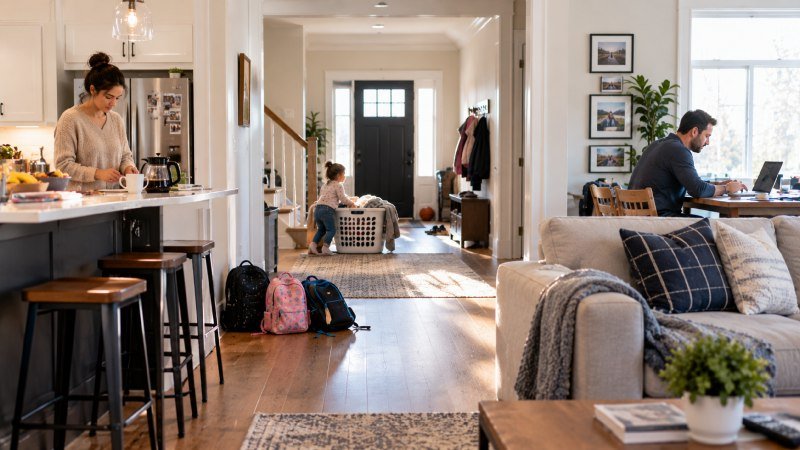
Picture a Tuesday morning with three backpacks tangled by the door, a coffee going cold on the counter, and the family room doing double duty as a makeshift office. The washer buzzes upstairs while a toddler tries to climb over a laundry basket blocking the hallway. Scenes like this repeat in homes across the country, and most parents chalk it up to a busy season rather than a signal that something bigger needs attention. For many households, the pattern becomes the norm long before anyone stops to question it.
When frustration builds, the instinct is usually to buy more storage bins, rearrange furniture, or declutter over a weekend. Those fixes help temporarily, but they rarely address why the space feels tight in the first place. A kitchen that’s too small for two people to cook together, or a single bathroom shared by five, isn’t a clutter problem. It’s a design mismatch that no amount of organizing will solve. Many families spend years adjusting their habits around a house instead of asking whether the house fits their habits.
What Actually Works
Families who feel genuinely comfortable in their homes usually did one thing differently early on: they paid attention to how they actually move through a day, not how they imagined they would. That means noticing where shoes pile up, where meals get eaten, and which room becomes the default gathering spot regardless of its intended purpose. Instead of forcing daily life to match a floor plan, they let the floor plan follow real behavior. Over time, that attention becomes a kind of quiet audit, one that reveals more truth than any renovation show ever could.
Once those patterns become obvious, some families choose renovation, others choose relocation, and a growing number start asking should you build a custom home instead of settling for a compromise that never quite fits. That question isn’t about luxury or square footage for its own sake. It’s about whether an existing structure can reasonably support the way a household actually lives, works, and grows, or whether starting from a blank layout would solve problems no remodel ever could. For a family outgrowing shared spaces or juggling remote work alongside three kids, the math on renovating an old layout versus designing a new one can shift quickly. Weighing that decision honestly, rather than defaulting to whatever option feels less disruptive, tends to produce better long-term satisfaction.
Smaller adjustments matter too, even for families staying put. Placing storage near entry points instead of far corners cuts down morning chaos significantly. Grouping activity zones, like keeping homework supplies near the kitchen table, reduces the constant back-and-forth that wears everyone down by evening. None of these changes require major construction, but they do require being honest about where the friction actually happens.
How to Apply This
Start by tracking a single ordinary week without trying to fix anything yet. Note where people bump into each other, where mess accumulates fastest, and which rooms sit unused most of the day. Writing it down, even briefly, turns vague annoyance into specific, actionable information. This kind of casual observation, done for even five or six days, reveals more about a home’s actual function than any design magazine ever could. Parents often find the answers surprising, since the friction points rarely match what they assumed going in.
Physical environment affects more than convenience. The CDC health and wellness resources point to clear links between living conditions and outcomes like sleep quality, stress levels, and how much daily movement a household gets, especially for children still building routines. A cramped or chaotic layout can quietly undercut sleep schedules and increase household tension, even when everyone is trying their best. Recognizing that connection reframes the question from how the house looks to how the house functions for the people living inside it.
Once the observation period ends, prioritize the one or two friction points causing the most daily stress rather than trying to overhaul everything at once. Small, targeted changes often relieve pressure faster than a full renovation plan drawn up in frustration. For families already sensing that their current layout won’t scale with their needs, treating this as an ongoing evaluation, rather than a one-time fix, tends to hold up better over the years ahead. Whatever the next step looks like, the goal stays the same: a home that quietly works with a family instead of against it.