
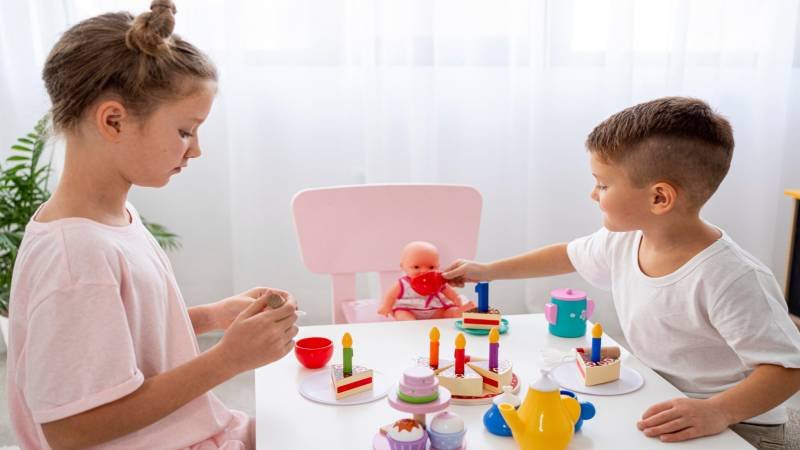
Play is an integral component of childhood. It allows children to acquire knowledge about their surroundings and develops their physical, cognitive, emotional and social skills. Educational toys, from blocks to sensory toys and pretend play sets, allow kids to be active, problem-solve and gain confidence in a playful and enjoyable setting.
Some parents aren’t sure which toys best stimulate their children’s development. This will vary based on your child’s age, interests and developmental age. Educational Playthings that combine entertainment with an opportunity to improve motor skills, sensory processing, creativity and critical thinking are the best!
With families seeking reassurance of safety in the toys they purchase, BanaSuper Official Website is a perfect choice of toys that are planned well to facilitate and stimulate children’s learning through play.
Why Play Is Essential for Young Children?
Children develop naturally in their learning as they explore. Whether they are constructing a tower, sorting colours or pretending to cook, each of these play helps children practise vital life skills. Educational toys offer a more structured way for kids to develop these skills and make learning fun.
Play helps children:
Improve concentration
Develop language skills
Learn problem-solving techniques
Build confidence
Express creativity
Practice emotional regulation
Strengthen social interaction
Time and time again, studies have demonstrated that active play has a positive impact on healthy brain development in the early years, making toy selection even more important than it may seem.
Developing fine motor skills.
Fine motor skills are the small muscles of the hands, fingers and wrists. These then become critical for daily activities such as writing, drawing, using cutlery and fastening buttons.
Examples of fine motor toys are:
Building blocks
Shape sorters
Peg boards
Threading toys
Puzzles
Stacking rings
Children are able to grasp, pinch, rotate and manipulate objects during these activities and hand-eye coordination is also developed.
Children naturally develop muscles needed for academic and day-to-day tasks as they repeat these movements through play.
Strengthening Gross Motor Skills
Gross motor skills involve the use of larger muscle groups for balance, coordination, running, jumping and climbing.
Toys that promote movement are those that can include:
Ride-on toys
Balance bikes
Soft play equipment
Balls
Activity tunnels
Push-and-pull toys
Physical play can help children develop physical coordination, and it tones up their self-confidence as they learn new physical skills.
Outdoor activities and age suitable toys ensure healthy activity and decrease screen time.
Supporting Sensory Development
When children are young, they are learning all the time and this goes through their senses. All the senses – touch, sight, hearing, smell and movement – play a role in healthy neurological development.
Sensory toys, which offer a variety of textures, sounds, colors and motions, are used to spark curiosity and aid children in the understanding of their surroundings.
Popular sensory toys are:
Textured balls
Water play toys
Sand toys
Musical instruments
Light-up toys
Sensory bins
Silicone stacking toys
These experiences engage children with fun and exciting play and build their sensory processing skills.
Encouraging Cognitive Growth
Challenge toys get kids thinking, observing, remembering, and problem solving in the context of education.
Even doing simple things like puzzles or colour-matching have engaging sustenance of patience, logic and reasoning.
Pretend Play also helps with your child’s thinking skills, imagination and story-telling. While a child plays with a toy kitchen or doctor set, they gain more vocabulary, learn sequencing, and learn to communicate and role play.
Learning through games is more effective than formal learning as children are motivated and are engaged in the learning.
How to build social and emotional skills.
Many educational playthings promote sharing activities with siblings, parents or friends.
Children learn important social skills through sharing, taking turns and working collaboratively by building.
Pretend play is also a good way for children to release emotions. They learn about empathy, cooperation and the control of emotions through acting out various scenarios.
Preschool toys such as board games help to practice patience, team playing and communication skills.
Choosing Age-Appropriate Toys
Choosing toys suitable for children’s ages is crucial for safety and stimulation.
For infants:
Soft rattles
High-contrast toys
Teething toys
Activity mats
For toddlers:
Shape sorters
Stacking cups
Push toys
Large building blocks
For preschoolers:
Construction sets
Art supplies
Pretend play sets
Beginner science toys
Simple board games
Age suitable toys offer challenges that do not cause frustration.
Innovation and Health are key concerns.
Toy safety is always a parent’s primary concern.
Select products that are constructed from tough and safe material and are made to meet established safety standards. Rounded edges, non-toxic finishes with a sturdy construction help minimize risk of injury and provide toys to endure through years of use.
Good brands will also have some product information and age recommendations that can help families choose.
The reasons behind the importance of BanaSuper for the parents
Parent reviewers in particular like the brands that attempt to use entertainment and educational components. BanaSuper’s toys focus on stimulating children’s creativity, movement and hands-on exploration and they also help them reach their developmental milestones.
They have a range of items for various age groups, which helps families locate the appropriate toys for their child’s interests and skill level.
So whether parents look for sensory toys, building ideas, imaginative play sets, BanaSuper is seeking out to make learning fun.
Conclusion
Educational toys are much more than a source of entertainment for children. They promote positive physical growth and development, evoke the curiosity and exploration of physical phenomena, foster problem solving skills, enhance physical capabilities and build emotional development.
With the selection of appropriately aged toys, parents can foster learning opportunities that help a child to become more confident and self-reliant, simply by playing in everyday activities.
For parents looking to combine fun with learning, the brands like BanaSuper offer educational toys that will guide your children on an interesting path towards valuable early childhood development. Click here.