
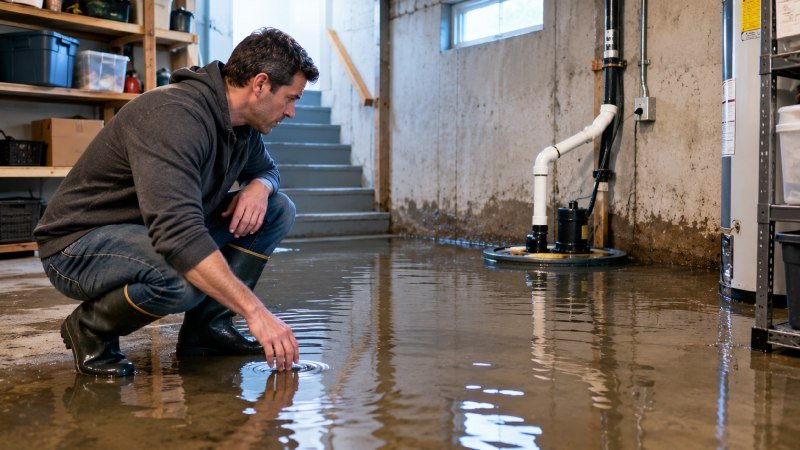
What’s Actually Sending Water Into Your Foundation
A flooded basement left untouched for even a few days can warp flooring, ruin stored belongings, and set the stage for structural decay that costs far more to fix than the original leak ever would. Ignoring the source of the water doesn’t make it go away; it just gives the problem time to spread into wall cavities, insulation, and framing where it’s harder to reach. Homeowners often assume a single heavy storm caused the issue, but repeated flooding usually points to a pattern rather than a one-time event.
Grading problems around the foundation are among the most common culprits, where soil slopes toward the house instead of away from it, funneling rainwater straight to the basement walls. Clogged or disconnected gutters can have the same effect, dumping runoff in concentrated spots along the perimeter instead of spreading it safely away from the structure. Cracked foundation walls, failed sump pumps, and aging window wells also show up again and again in inspection reports. Each of these sources behaves differently depending on rainfall intensity, soil type, and how old the home’s drainage system is.
Sorting Out Which Water Source Deserves Priority
Not every source of basement water carries the same urgency, and figuring out which one to address first often comes down to how the moisture is entering and how much damage it’s already caused. A slow seep through a hairline crack behaves very differently than a sump pump failure during a storm, and the fix for each looks nothing alike. Homeowners evaluating their options should look at frequency first: water that appears after every rain points to an exterior drainage issue, while water that shows up only during extreme weather events may indicate a sump system that’s simply overwhelmed.
Material damage is the next factor worth weighing, since standing water that’s touched drywall, insulation, or carpeting for more than 24 to 48 hours starts creating conditions for mold growth that won’t resolve on its own. At that point, many homeowners bring in mold remediation services rather than attempting to dry everything out themselves, since surface drying doesn’t address spores that have already worked into porous materials. Cost is the third consideration, and smaller interventions like regrading soil or sealing a crack are often far cheaper than waiting until foundation repair becomes unavoidable.
Safety shouldn’t be an afterthought during this evaluation, particularly when floodwater has been sitting for a while or when electrical systems are anywhere near the affected area. Guidelines outlined in the OSHA water damage safety standards describe the contamination risks and electrical hazards that come with standing water, useful context for anyone deciding whether to handle cleanup personally or call in help. Wading into a flooded basement without knowing what’s in the water, or whether circuits are still live, has sent more than one well-meaning homeowner to the emergency room.
Choosing a Long-Term Fix Instead of a Temporary Patch
Once the source and severity are clear, the decision usually splits into two paths: a contained repair aimed at the immediate entry point, or a broader waterproofing project meant to prevent recurrence altogether. Homeowners dealing with their first flood often lean toward the cheaper, narrower fix, which makes sense when the cause truly is isolated. Repeat flooding almost always signals that a single patch won’t hold, and spending on partial fixes year after year adds up faster than most people expect.
Budget matters, though it shouldn’t be the only lens homeowners use when making this call. A drainage system that costs more upfront but carries a warranty and addresses the actual grading problem will almost always outperform a sealant applied to cracked concrete without fixing what caused the crack. Local climate patterns deserve consideration too, since homes in regions with heavy seasonal rainfall need more aggressive exterior waterproofing than those dealing with occasional flash flooding.
The final step is matching the fix to how long you plan to stay in the home. Someone selling within a couple of years might reasonably choose a less expensive repair, while a family settling in for the long haul benefits more from a complete exterior drainage overhaul. Either way, the choice works best when it’s based on the actual water source rather than guesswork, since misdiagnosing the problem is the single biggest reason basements keep flooding after supposed repairs.