
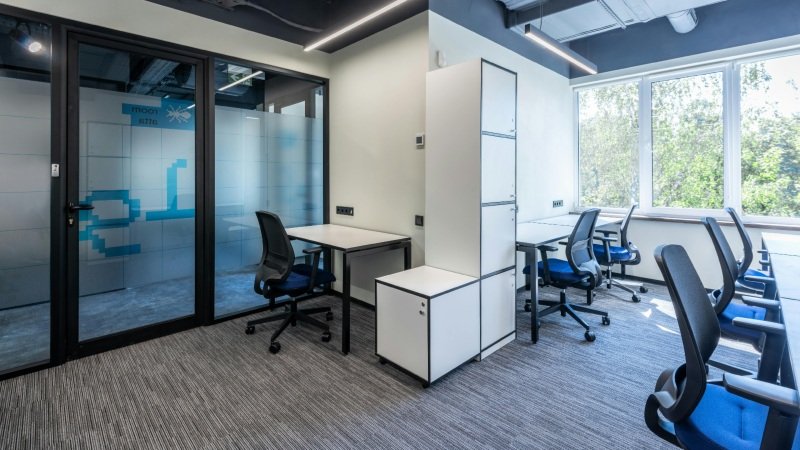
Modern workplaces are changing rapidly. Over the last decade, companies have started moving away from rigid office layouts and toward more flexible commercial environments designed to support collaboration, productivity, and employee well-being at the same time. What was once considered a functional office setup no longer meets the needs of many modern businesses.
Today’s companies operate in far more dynamic conditions. Teams grow, departments restructure, hybrid schedules evolve, and workspace requirements shift constantly. Because of this, commercial interior design is no longer viewed as a purely aesthetic decision. It has become closely tied to efficiency, workplace culture, and long-term business performance.
Businesses are increasingly looking for office layouts that can adapt without requiring expensive renovations every few years. Flexible workspaces allow companies to respond more effectively to operational changes while maintaining a professional and organized environment.
Why Traditional Office Designs No Longer Work
For years, many companies embraced open office concepts as a way to encourage communication and teamwork. While these layouts initially appeared modern and collaborative, businesses eventually began noticing several drawbacks. Excessive noise, constant distractions, and limited privacy often reduced employee focus and productivity.
At the same time, traditional closed office structures created their own problems. Permanent walls and isolated departments frequently limited communication and made offices feel restrictive. Businesses needed a middle ground — something capable of preserving openness while still providing privacy and structure where necessary.
This is where flexible partition systems started becoming increasingly important in commercial design. Rather than relying entirely on permanent construction, businesses began using adaptable interior solutions that could evolve alongside changing workplace demands.
The Role of Flexible Partition Systems
Modern partition systems allow companies to create organized work areas without sacrificing flexibility. Instead of committing to fixed layouts, businesses can modify spaces more efficiently as teams expand or operational needs change.
Glass partitions, in particular, have become extremely popular in commercial spaces because they balance functionality with modern aesthetics. They help maintain natural light throughout the office while still creating designated meeting rooms, quiet workspaces, and private offices.
Beyond appearance, these systems also contribute to workplace comfort. Employees generally perform better in environments where distractions are minimized and workspaces feel intentionally designed. Noise reduction, improved organization, and visual openness all contribute to a healthier and more productive atmosphere.
Companies investing in adaptable commercial interiors often prioritize long-term practicality rather than short-term trends. Businesses working with providers like One Point Partitions frequently focus on creating office layouts that can evolve over time without requiring major reconstruction or disruptive renovations.
How Office Design Impacts Productivity
Workspace design directly influences how employees think, communicate, and perform throughout the day. Research in workplace psychology consistently shows that factors such as lighting, spatial organization, privacy, and noise levels affect concentration and overall job satisfaction.
Employees who constantly deal with distractions or uncomfortable environments often struggle to maintain focus for extended periods. On the other hand, thoughtfully designed offices support both collaborative and independent work by giving employees spaces appropriate for different tasks.
Modern commercial layouts are increasingly designed around flexibility because businesses recognize that employees rarely work the same way all day. Some tasks require collaboration and discussion, while others require privacy and uninterrupted concentration. Effective office design supports both without forcing companies into rigid structures.
This is one reason why commercial interior planning has become more strategic in recent years. Businesses are no longer designing offices simply to look modern. They are designing them to improve operational efficiency and create better day-to-day experiences for employees and clients alike.
The Growing Importance of Adaptability
Adaptability has become one of the defining priorities of modern commercial spaces. Companies today need environments capable of changing alongside the business itself. This is especially important in industries experiencing rapid growth, restructuring, or hybrid work transitions.
Many organizations no longer want to invest in expensive renovations every time their operational needs shift. Flexible partition systems provide a more efficient alternative because they allow layouts to be adjusted incrementally rather than rebuilt entirely from scratch.
This approach also reduces disruption. Large construction projects often interfere with daily operations, create downtime, and increase unnecessary costs. Modular interior solutions allow businesses to modernize offices while maintaining continuity and minimizing interruptions.
For growing businesses, this flexibility can be especially valuable. Expanding companies often experience changing team sizes and evolving workspace requirements that make permanent office structures impractical. Adaptable interiors provide room for growth without forcing businesses into repeated redesign cycles.
Balancing Privacy and Collaboration
One of the biggest challenges in commercial office design is balancing collaboration with privacy. Businesses want employees to communicate effectively, but they also need spaces where people can focus, hold meetings, or work without constant interruptions.
Modern partition systems help solve this problem by creating defined work areas without making offices feel closed off or restrictive. Glass structures, acoustic partitions, and modular layouts allow companies to maintain openness while still supporting privacy where needed.
This balance has become even more important with the rise of hybrid work environments. Offices now serve multiple purposes simultaneously. Some employees come in for meetings and teamwork, while others need quiet environments for focused tasks during limited in-office hours.
Flexible commercial layouts allow organizations to support these different working styles more effectively. Instead of forcing every employee into the same environment, businesses can create spaces tailored to various needs throughout the office.
Long-Term Value for Businesses
Commercial interior design is increasingly viewed as a long-term investment rather than a one-time project. The physical environment of a workplace affects employee satisfaction, client perception, and overall operational efficiency.
A well-designed office communicates professionalism, organization, and attention to detail. It also helps businesses create environments where employees feel comfortable, productive, and motivated. Companies that prioritize thoughtful workspace design are often better positioned to attract talent and adapt to future workplace changes.
Sustainability has also become an important consideration in commercial construction and office planning. Many businesses are actively seeking solutions that reduce waste and extend the lifespan of interior investments. Flexible partition systems support these goals because they can often be reconfigured or reused instead of demolished and replaced entirely.
Conclusion
Modern office design is no longer just about aesthetics. It has become closely connected to productivity, employee experience, and long-term business adaptability. Companies today need commercial spaces capable of evolving alongside changing operational demands without sacrificing professionalism or functionality.
Flexible partition systems have become an important part of this shift because they allow businesses to create organized, efficient, and adaptable environments without relying entirely on permanent construction. As workplace expectations continue to evolve, companies that invest in smarter commercial layouts will likely be better prepared for future growth and operational change.
The most successful businesses increasingly understand that office design is not simply about how a workspace looks. It is about how effectively that space supports the people working inside it every day.