
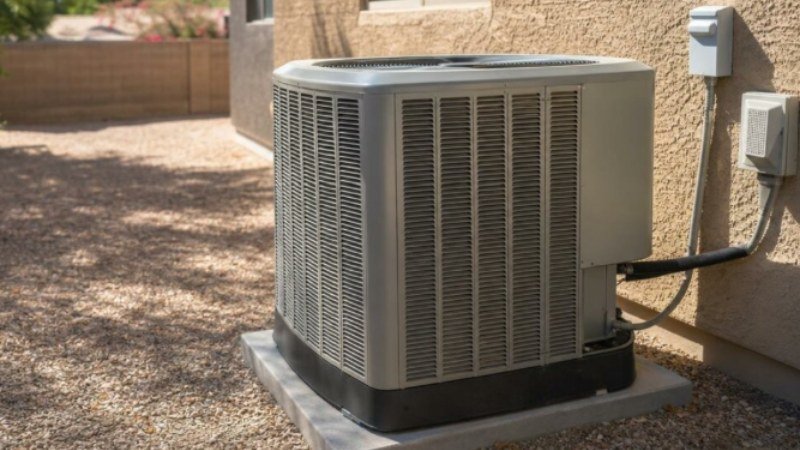
Phoenix Valley homeowners know the summer heat is no joke. Temperatures regularly push past 110°F, putting serious strain on every AC unit across the Valley. So how long does an AC unit last in Arizona, really? The answer depends on more than just the brand. Penguin Air, Plumbing & Electrical, a Phoenix-based HVAC company founded in 2011, has serviced thousands of cooling systems across the Sonoran Desert and documented how the climate affects equipment lifespan in ways most manufacturer warranties never account for.
The Real AC Lifespan Numbers for Arizona Homeowners
In a moderate climate like Minneapolis, a central air conditioner can run 15 to 20 years. In the Scottsdale, Tempe, and Ahwatukee heat, that drops to a more realistic 12 to 15 years. Valley summers run from May through October, with temperatures routinely hitting 110 to 115 degrees. An AC unit is not cycling on and off like it would in a coastal city. It runs almost constantly for six straight months, logging far more operating hours than the engineers behind those lifespan estimates anticipated.
Skipping regular maintenance is the fastest way to shorten that window. Dirty coils, clogged filters, and low refrigerant force the system to work harder than it should. A unit that might reach the upper end of its range with proper care can wear out in 10 years or less without it. Twice-yearly tune-ups, before summer and before the winter heating season, are the single most effective way to protect the investment.
Why Phoenix Is Harder on AC Units Than Almost Any Other City
Extreme Heat Cycles Wear Down Compressors Faster
Most residential AC equipment is designed with an ambient temperature ceiling around 105 to 110 degrees Fahrenheit. In Chandler and Glendale, summer afternoons regularly push past 115 degrees. At those temperatures, refrigerant pressure climbs higher than the equipment was built to sustain for long stretches, accelerating wear on seals and coil surfaces. That is one reason desert compressors fail years ahead of identical units installed in cooler regions.
Dust, Caliche Soil, and Monsoon Season Add Extra Stress
The Valley sits on caliche, a chalky mineral soil that breaks into fine particulate and works its way into condenser coils and air filters faster than organic soil does in humid climates. Clogged coils restrict airflow, causing the system to run hotter than it should. Monsoon season, June through September, then layers sudden humidity spikes and blowing dust storms on top of months of dry heat, pushing debris directly into outdoor condenser fins and coil surfaces.
Repair or Replace? How to Make the Call
The decision usually comes down to two things: the age of the system and the cost of the fix.
- Under 8 years old, repair under $500: Repair is almost always the right call.
- 10 to 12 years old, repair between $800 and $1,500: Weigh it carefully against efficiency and remaining lifespan.
- 12-plus years old, repair over $1,500: Replacement is usually the smarter financial move.
A useful benchmark is the Rule of 5,000: multiply the unit’s age by the estimated repair cost. If that number tops $5,000, replacement is generally the stronger financial decision. A 13-year-old unit needing a $450 repair looks affordable on the surface, but 13 x $450 = $5,850, crossing the threshold.
Older units installed around 2014 or 2015 often carry a SEER rating of only 10 to 12. The federal minimum for the Southwest is now SEER2 14.3. Upgrading to a modern high-efficiency system can reduce monthly cooling costs by 20 to 30 percent over a six-month cooling season, and new systems typically include 10-year manufacturer warranties on the compressor and parts when registered.
For homeowners unsure whether a repair quote is reasonable, packaged HVAC unit services from Penguin Air, Plumbing & Electrical can help determine whether a repair or full replacement makes more sense for a specific system.
Frequently Asked Questions
How long does an AC unit last in Arizona compared to other states?
Most AC units last 15 to 20 years in moderate climates. In the Phoenix Valley, a realistic lifespan is 12 to 15 years. Six-month cooling seasons and extreme heat put far more annual operating hours on a unit than manufacturers typically account for in their estimates.
What makes Phoenix so hard on air conditioners?
Three factors accelerate wear: temperatures that regularly exceed the equipment’s design ceiling, caliche soil particulate that clogs coils and filters faster than organic soil, and monsoon season humidity spikes that stress refrigerant systems already under pressure from months of dry heat.
How do I know if it’s time to repair or replace my AC unit?
The Rule of 5,000 provides a reliable starting point: multiply the unit’s age by the estimated repair cost. If the result exceeds $5,000, replacement is generally the stronger financial move. Units 12 years or older facing repairs above $1,500 are strong replacement candidates.
What is SEER2 and why does it matter for Phoenix homeowners?
SEER2 is the current federal efficiency rating standard for air conditioners. The Southwest minimum is now SEER2 14.3. Older units often rate as low as SEER 10 to 12, and upgrading can reduce monthly cooling costs by 20 to 30 percent during the Valley’s cooling season.
Does regular maintenance actually extend AC lifespan in the desert?
It is the single most effective step a homeowner can take. Dirty coils, clogged filters, and low refrigerant force the system to work harder, shortening its lifespan and raising utility bills. Twice-yearly tune-ups help a unit reach the upper end of its expected range rather than wearing out prematurely.
About Penguin Air, Plumbing & Electrical
Penguin Air, Plumbing & Electrical is a Valley-based HVAC, plumbing, and electrical company founded in 2011 and headquartered in Phoenix, AZ. The company holds a BBB A+ Rating and has maintained BBB Accreditation since its founding year. Its NATE-certified technicians serve homeowners across the Greater Phoenix Metro Area, from Peoria and Surprise in the northwest to Ahwatukee and Chandler in the southeast, with services covering air conditioning, heating systems, heat pump technology, indoor air quality, and residential and commercial plumbing.
Business Name: Penguin Air, Plumbing & Electrical
Address: 3710 E University Dr # 1, Phoenix, AZ 85034
Phone Number: (480) 525-5400
<iframe src=”https://www.google.com/maps/embed?pb=!1m18!1m12!1m3!1d3330.032773588283!2d-112.0015335!3d33.4223899!2m3!1f0!2f0!3f0!3m2!1i1024!2i768!4f13.1!3m3!1m2!1s0x872b0ee0168c3a39%3A0xbf0da35d2895aa6!2sPenguin%20Air%2C%20Plumbing%20%26%20Electrical!5e0!3m2!1sen!2sph!4v1782380273625!5m2!1sen!2sph” width=”600″ height=”450″ style=”border:0;” allowfullscreen=”” loading=”lazy” referrerpolicy=”strict-origin-when-cross-origin”></iframe>