
Background
Most families assume that once the sun goes down, the day’s outdoor activity is basically over. Dinner gets served, screens go on, and kids drift indoors while parents catch up on chores or unwind before bed. Many households build routines around this idea, treating evening hours as a wind-down period rather than a window for connection or movement. The assumption is understandable given how much daily life revolves around daylight hours for errands, sports practice, and school pickups. Yet this view overlooks how much value the early evening still holds, particularly for families juggling busy schedules that leave little daylight time for anything but logistics.
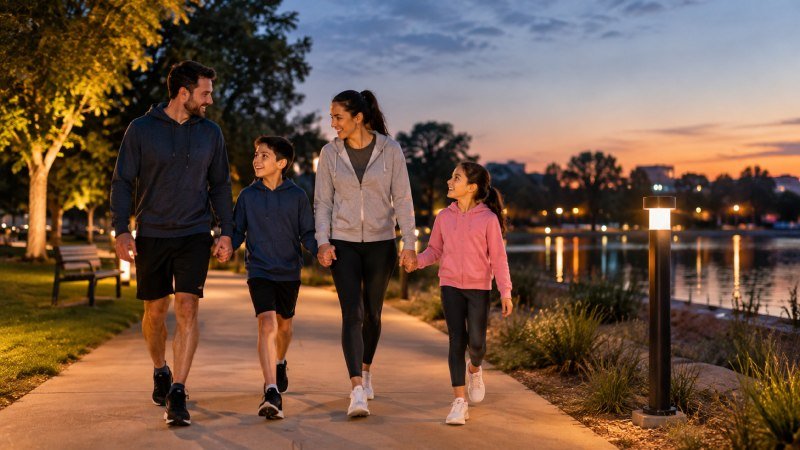
A closer look at how families actually spend their evenings tells a different story. Neighborhoods with well-lit sidewalks, parks, and community spaces tend to see more foot traffic after dinner, not less. Parents walk dogs, kids ride bikes, and neighbors chat on porches well past sunset in areas where visibility feels safe. Businesses and civic groups have started paying attention to this pattern, recognizing that extending usable outdoor hours benefits more than just retail traffic. The shift has practical implications for how communities design public and commercial spaces, especially in regions where mild evenings make outdoor time appealing for most of the year.
What the Research Shows
Sleep and activity researchers have spent years studying how evening light exposure affects mood, energy, and rest. Findings consistently point to circadian rhythm as the mechanism behind why well-timed outdoor exposure, even after sunset, helps regulate sleep cycles rather than disrupt them. This runs counter to the common belief that any light after dark interferes with rest. The distinction lies in the type and intensity of light, along with the activity paired with it. Gentle movement outdoors in early evening, under adequate lighting, appears to support rather than harm nightly wind-down routines for both adults and children.
Municipal and commercial planners have started applying these findings to how they design shared spaces. Retail centers, office parks, and community gathering areas increasingly invest in lighting systems designed to extend safe outdoor use into the evening rather than shutting activity down at dusk. Projects involving commercial landscape lighting in north dallas illustrate this shift, where thoughtfully placed fixtures along walkways and gathering areas allow families and employees to linger outside longer without sacrificing visibility or a sense of security. The goal isn’t decorative alone; it reflects a growing understanding that usable evening space contributes to physical activity levels and general wellbeing across a community.
Public health guidance has echoed this shift for years, encouraging communities to think beyond daylight hours when planning for physical activity and outdoor recreation. Resources from national health agencies, including CDC health and wellness resources, note that even modest increases in evening movement can support cardiovascular health and stress reduction, particularly for adults with limited daytime flexibility. Programs aimed at families frequently cite evening walks and outdoor play as accessible options precisely because they fit around work and school schedules. The takeaway isn’t that darkness is dangerous, but that well-planned lighting removes a barrier that otherwise discourages people from stepping outside once the sun sets.
Practical Takeaways
Families looking to make better use of evening hours don’t need elaborate plans. A short walk after dinner, a driveway basketball game under a porch light, or simply sitting outside while the kids ride bikes can add real activity to a day that otherwise ends at the dinner table. The barrier for most households isn’t motivation so much as visibility and a sense of safety once daylight fades. Small adjustments, like keeping walkways lit or choosing routes with adequate street lighting, tend to matter more than any specific exercise routine.
Communities benefit when this thinking extends beyond individual households to shared spaces like parks, shopping areas, and office campuses. When people feel comfortable walking, gathering, or letting kids play outside after work hours, the ripple effects touch everything from local business activity to neighborhood cohesion. None of this requires abandoning indoor routines or screen time entirely. It simply means treating the evening as an extension of the day rather than its quiet ending, with lighting as one of the simplest tools available to make that shift possible.