
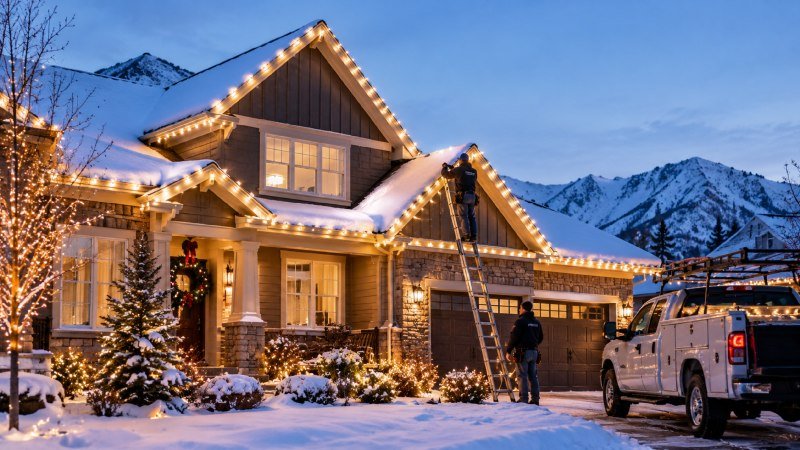
Ladders, Timing, and the Cost of Doing It Yourself
Many Utah homeowners discover every November that the holiday lights they packed away still have gaps, dead sections, or tangled wiring that eats an entire weekend to sort out. The window between Thanksgiving and the first serious cold snap is short, and climbing a ladder onto an icy roofline is not how most people want to spend a Saturday. Snow arrives early in many parts of the state, and once temperatures drop, working outside for hours becomes both uncomfortable and genuinely risky.
Beyond the physical discomfort, there is the matter of getting the display right. Uneven spacing, exposed cords, and bulbs that burn out mid-season are common complaints among families who tackle installation themselves year after year. A ladder fall is one of the most frequent household injuries during the holiday season, and insurance claims tied to roof and gutter damage from improper clip placement are not rare either. The result is a lot of stress for a display that often looks rushed rather than festive.
Matching the Right Installer to the Scope of the Job
Professional installation has become the practical answer for homeowners who want a polished look without the personal risk. Crews trained for rooflines, gutters, and trees typically arrive with commercial-grade clips, weather-rated extension cords, and layout plans that account for the specific architecture of a house rather than a one-size-fits-all approach. This matters more in Utah than people expect, since steep A-frame roofs and heavy snow loads common in the Wasatch Front and surrounding valleys demand different mounting techniques than a flat ranch-style home in a milder climate.
Homeowners researching options in Salt Lake City, Park City, or Provo often find that requesting Utah holiday lighting installation from a local provider shortens the whole process considerably, since crews already know which fixtures hold up against wind and temperature swings specific to the region. A good installer will also walk through takedown service, storage, and warranty coverage before the first light goes up, which avoids the awkward conversation in January about who is responsible for removal. That kind of upfront planning is what separates a one-season vendor from a company homeowners call back year after year.
Pricing varies based on roofline length, tree count, and whether a design includes ground stakes or wreaths in addition to eave lighting. It helps to ask for an itemized quote rather than a flat number, since that breakdown shows exactly what is being paid for and makes comparing providers far easier. Some companies also offer maintenance visits during the season to replace any bulbs that fail in cold weather, which is a detail worth asking about directly rather than assuming it is included.
Questions Worth Asking Before Signing a Contract
Not every lighting company operates the same way, and homeowners benefit from a short checklist before committing to a contract. Ask whether the crew carries liability insurance for roof work, since that protects the homeowner if a tile cracks or a gutter bends during installation. Confirm whether the team uses LED lights rather than incandescent lights, since LED strands draw a fraction of the electricity and hold up better through the repeated freeze-thaw cycles common in Utah winters.
Energy use is worth a closer look too, particularly for anyone running a display for six or more hours a night across several weeks. The ENERGY STAR lighting guidance available through ENERGY STAR outlines how much lower LED consumption runs compared to older bulb types, which can translate into a noticeably smaller bump on the December power bill. Homeowners who ask their installer directly about bulb wattage and total circuit load tend to avoid tripped breakers partway through the season, a detail that sounds minor until it happens at eight o’clock on a Friday night with guests in the driveway.
It also helps to ask about takedown timing and storage practices, since proper coiling and labeling of strands extends their usable life by several seasons. A company that treats removal and storage as part of the service, rather than an afterthought, usually reflects the same attention to detail in the installation itself. Reading a handful of recent local reviews, rather than relying solely on a company’s own website, rounds out the picture and often reveals how a crew handles unexpected weather delays or last-minute design changes.