
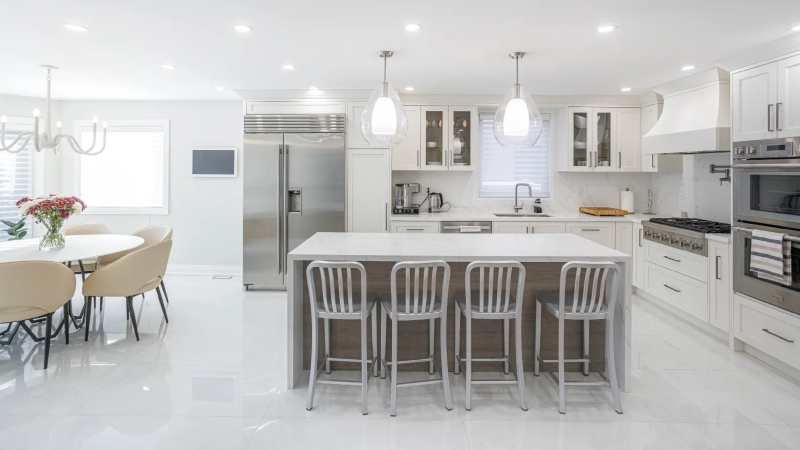
Every kitchen renovation begins with a moment of clarity. You are standing at the counter, looking at the layout that has frustrated you for years, and you decide that enough is enough. The cabinets that have been sticking since the previous owners’ time, the traffic pattern that forces whoever is cooking to flatten against the refrigerator every time someone walks past, the lighting that makes the whole room feel perpetually gray at seven in the morning. Something is going to change.
That decision is the easy part. What comes next is where most homeowners feel uncertain. The kitchen is the most complex room in the house to renovate, and also the one where investment most reliably translates into both daily quality of life and resale value. Getting it right requires understanding the process, not just the aesthetics.
Homeowners who have worked through a custom kitchen renovation in Toronto with an experienced firm consistently cite the same revelation: the planning phase took longer than they expected and saved them far more than they expected. The time spent getting the design right before construction begins is never wasted.
Starting with Function, Not Fixtures
The instinct when planning a kitchen renovation is to start with what you want it to look like. Countertop material. Cabinet door style. Hardware finish. These are the visible elements that get pinned to boards and shared in design consultations, and they matter. But the renovations that genuinely transform how a kitchen works begin with a different question: how do you actually use this room?
Think about your cooking patterns. Are you frequently cooking for a crowd or mostly for two? Do you bake regularly and need counter space for prep and cooling? Do you have children who use the kitchen as a homework station in the evenings? Is the kitchen the social hub of your home, the room where guests inevitably end up regardless of where you want them to be?
The answers to these questions should drive layout decisions before any aesthetic preferences are applied. A kitchen that functions beautifully for how you actually live is worth more than a stunning kitchen that fights your habits every single day.
Layout: The Most Consequential Decision You Will Make
Kitchen layout is the highest-leverage decision in any kitchen renovation. Unlike cabinetry or countertops, the layout is extremely expensive to change once construction is underway. Getting it wrong means living with the compromise for decades.
The fundamental principle of kitchen layout is the work triangle: the relationship between the refrigerator, the sink, and the cooking surface. When these three points are within a reasonable distance of each other and clear of heavy traffic paths, the kitchen functions efficiently. When they are not, every meal involves unnecessary steps.
Whether you are working within a galley layout, an L-shape, a U-shape, or an open-concept design, the work triangle principle applies. Before committing to a layout, trace through the actual steps of your most common cooking scenarios. Does the design support them, or does it create bottlenecks?
The Cabinetry Conversation
Cabinetry accounts for a significant portion of a kitchen renovation budget, often 30 to 40 percent of the total. That proportion justifies careful consideration of both quality and configuration.
The difference between builder-grade stock cabinetry and semi-custom or custom cabinetry is not primarily aesthetic. It is structural. Better cabinetry uses solid wood boxes with dovetail joints rather than stapled particleboard. The drawer slides are full-extension with soft-close mechanisms that will still function smoothly in fifteen years. The hinges are adjustable and built for repeated use.
From a configuration standpoint, the most valuable kitchen cabinet investments are typically in storage organization. Deep drawer bases instead of lower cabinet doors. Pull-out shelving in corner units. Tall pantry cabinets that maximize vertical storage. Spice drawer inserts and utensil organizers. These are the details that make a kitchen feel genuinely organized rather than just tidy for the photographer.
Countertops: Beauty vs. Practicality
The countertop conversation usually happens alongside the cabinetry conversation, and the two should inform each other visually. But the countertop choice also needs to survive your actual kitchen habits.
Quartz is the most popular countertop material in renovated Toronto kitchens because it performs exceptionally well under daily use. It is non-porous, which means it does not absorb staining liquids or bacteria, and it does not require sealing. The pattern is consistent throughout the slab.
Natural stone like marble or quartzite offers veining and character that engineered quartz cannot fully replicate, but it requires more care. Marble in particular is susceptible to etching from acidic substances like lemon juice and vinegar, which can be managed with proper sealing and awareness but should be understood before selecting.
Permits and What They Cover
A kitchen renovation that involves moving plumbing, changing electrical service, or removing walls requires permits from the City of Toronto. These permits are not bureaucratic nuisances. They are the mechanism by which licensed inspectors verify that the work has been done to code, which protects your home and your insurance coverage.
Any renovation firm that suggests skipping the permit process as a cost or time-saving measure is advising you to take a significant risk with your investment. Unpermitted electrical and plumbing work can be flagged on a home inspection, create difficulties with home insurance claims, and become your problem to remedy at full cost when you sell.
Build the permit timeline into your project planning. In Toronto, permit approvals can take several weeks, and understanding this reality at the outset prevents the frustration of delays that were entirely predictable.