
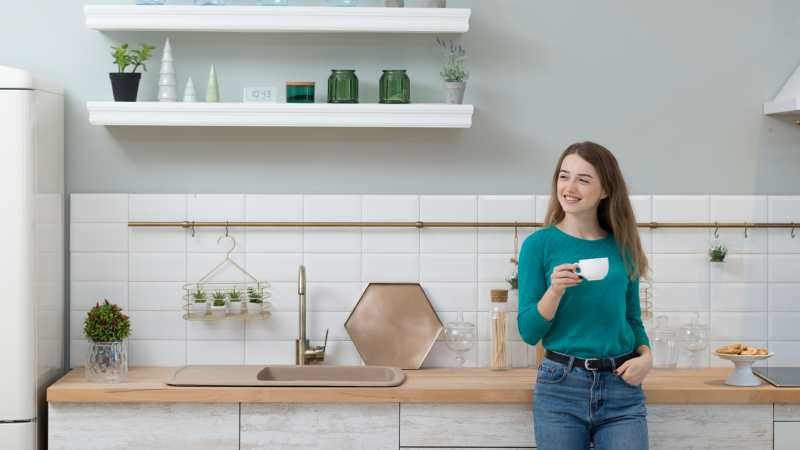
Style open shelving in a kitchen by displaying a balanced mix of everyday essentials and decorative accents. The foundation includes white or neutral dishes, clear glassware, and wooden cutting boards. Layer in style with small plants, ceramic pieces, cookbooks, and glass jars filled with dry goods. Stick to a cohesive color palette of two to three tones, mix materials like ceramic, glass, wood, and metal, and leave breathing room between items. The goal is a curated collection that feels intentional, not cluttered.
What Everyday Items Look Best on Open Kitchen Shelves?
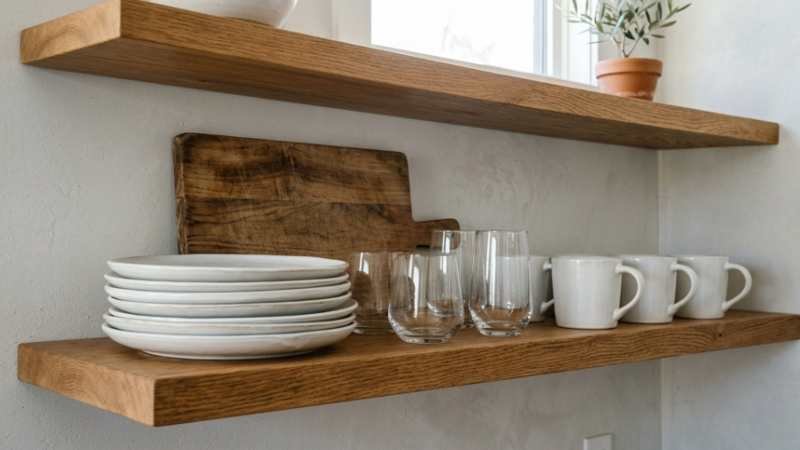
Everyday items that you use regularly make the best display pieces because they earn their spot through function and form.
Dishes and bowls: White or neutral ceramic plates and bowls photograph well and work with any kitchen style. Stack them in small groups rather than tall towers.
Glassware: Clear drinking glasses and stemware catch light and add sparkle. Group similar pieces together for a clean look.
Mugs: Display your favorite mugs with handles facing the same direction. Matching sets look polished, but a curated mix works too.
Cutting boards and serving pieces: Wooden cutting boards leaned against the wall add warmth and texture. Wooden or marble serving boards do the same.
These functional pieces form the foundation of styled open kitchen shelving.
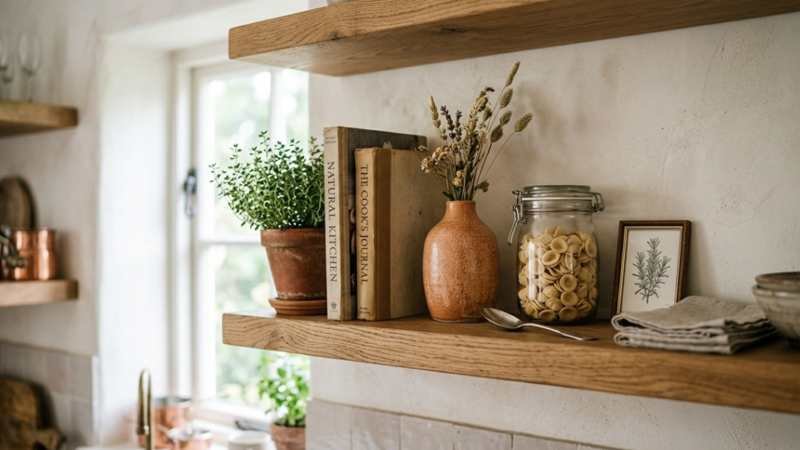
Decorative accents transform functional shelves into a design feature. Choose pieces that complement your kitchen style without overwhelming the space.
Plants: Small potted herbs, succulents, or trailing plants bring life and color. They soften the hard lines of dishware and add freshness.
Cookbooks: A few cookbooks stood upright or stacked horizontally add personality. Choose covers that fit your color scheme.
Ceramic pieces: Vases, small bowls, or pottery in complementary colors add visual interest. Look for pieces with texture or unique shapes.
Glass jars: Clear jars filled with pasta, rice, or spices look beautiful and serve a purpose. They add height variation and visual weight.
Small art or objects: A tiny framed print, a sculptural object, or a meaningful item personalizes the space.
The key is restraint. A few well-chosen decorative pieces elevate the look. Too many create visual noise.
What Colors and Materials Create a Cohesive Look?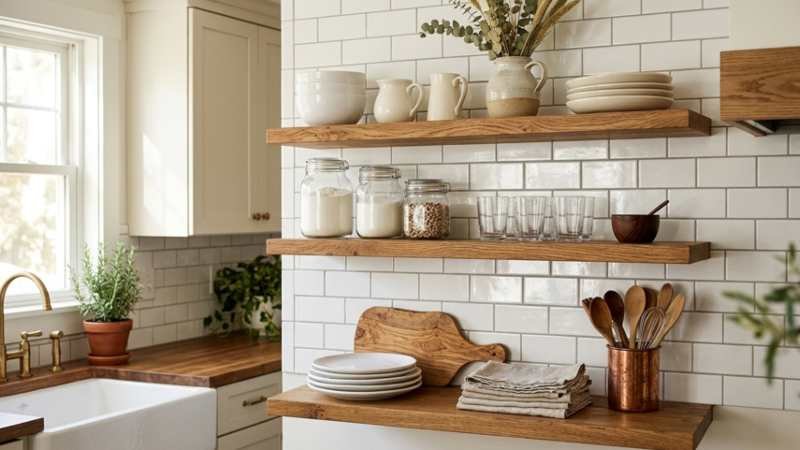
A cohesive color palette prevents open shelves from looking chaotic. Limit your palette to two or three colors that appear throughout.
Neutral foundations: White, cream, black, and natural wood tones work in almost any kitchen. They create calm and let accent pieces stand out.
Accent colors: Add one or two accent colors through plants (green), ceramics (blue, terracotta), or copper utensil holders. Repeat these accents across the shelves for consistency.
Material mix: Combine ceramic, glass, wood, and metal for depth and texture. A mix of materials feels collected over time rather than purchased as a set. If your kitchen features modern farmhouse architecture, warm woods and matte ceramics create the right aesthetic.
The wall behind your shelves matters too. A contrasting backdrop makes items pop. Kitchen backsplash tiles in subway, natural stone, or patterned designs add texture and elevate simple dishware. Even basic tiles in a complementary color create depth that painted walls cannot match.
What Items Should You Avoid Displaying?
Some items kill the styled look no matter how you arrange them. Keep these behind closed cabinet doors.
Plastic containers: Mismatched food storage containers look cluttered and cheap. Store them out of sight.
Rarely used appliances: That bread maker you use twice a year does not belong on display. Open shelves are for items you reach for regularly.
Damaged or stained items: Chipped dishes, stained mugs, or worn cutting boards drag down the entire look.
Too many items: The most common mistake is overcrowding. If shelves look packed, remove pieces until you see breathing room between groupings.
Random collections: Every item should feel intentional. If you cannot explain why something is there, it probably should not be.
Edit ruthlessly. The best styled open kitchen shelves have fewer items than you think they need.
Conclusion
Styling open shelving in a kitchen comes down to choosing the right items. Build your foundation with everyday pieces like neutral dishes, clear glassware, and wooden boards. Add personality with plants, ceramics, cookbooks, and glass jars. Stick to a cohesive color palette and mix materials for depth. Edit out anything that does not earn its place. When every item is intentional, open kitchen shelving becomes a design feature rather than storage.
FAQs
How Many Items Should You Put on Open Kitchen Shelves?
Less than you think. Leave 30 to 40 percent of shelf space empty so items can breathe. Start minimal and add only what improves the look.
Do Open Kitchen Shelves Have to Match?
No. Coordinated looks better than identical. Mix materials and shapes while keeping colors consistent. The collected-over-time aesthetic feels more authentic than a matching set.
What Is the Best Shelf Material for a Styled Kitchen Look?
Natural wood shelves add warmth and work with most styles. Floating wood shelves in walnut, oak, or white oak are popular choices that complement both modern and traditional kitchens.
Can You Mix Open Shelves With Closed Cabinets?
Yes. Many kitchens combine both for function and style. Use open shelves for display-worthy items and closed cabinets for less attractive storage.
How Do You Keep Open Kitchen Shelves Looking Clean?
Display only items you use and wash regularly. Wipe shelves weekly since open storage collects dust and kitchen grease faster than closed cabinets.